
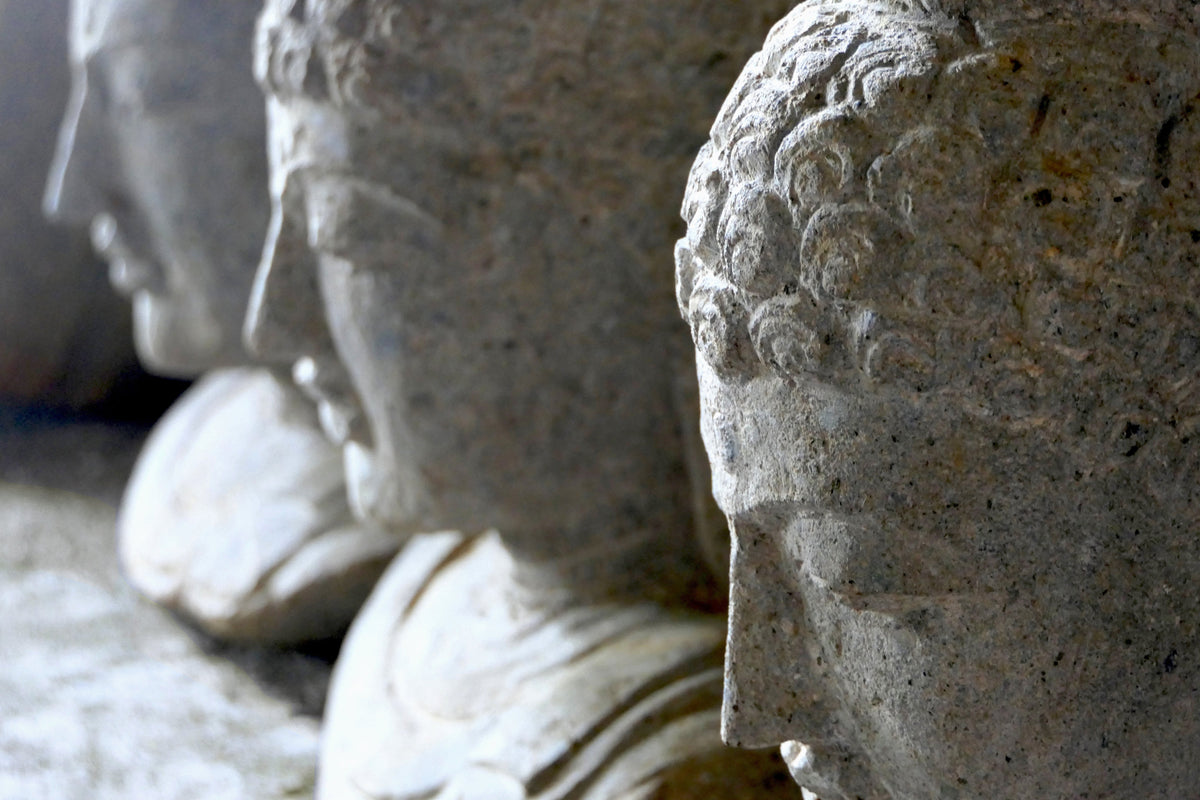
From Ancient Temples to Modern Homes: The Evolution of Buddha Statues

The tradition of creating Buddha statues in Southeast Asia developed over many centuries as Buddhist teachings travelled through the region. Local materials, artistic traditions and religious schools shaped distinct forms, expressions, robes and hand gestures.
BOROBUDUR: A MONUMENTAL EXAMPLE
One of Southeast Asia’s most important ensembles of stone Buddha images is found at Borobudur in Central Java, Indonesia.

Built in the eighth and ninth centuries, the Buddhist monument contains more than 2,600 narrative and decorative relief panels and 504 Buddha statues. Its terraces form a symbolic journey from the earthly realm toward enlightenment, making Borobudur one of the world’s great Buddhist monuments and a masterpiece of Javanese stone carving.
FORM, GESTURE AND MEANING
Buddha statues communicate through posture and gesture. Seated, standing and reclining figures convey different moments and teachings, while hand positions known as mudras can express meditation, reassurance, teaching or the calling of the earth to witness enlightenment.
A LIVING CRAFT IN JAVA

Stone carving remains an active craft in Java. Contemporary artisans work with local stone and skills passed through workshops and families, creating figures that carry the visual language of older traditions while bearing the individual marks of hand carving.
Discover Kirschon’s collection of Buddha and other stone statues from Southeast Asia online or in our Dizzasco showroom near Lake Como, open by appointment. Free shipping is available to most European countries, and prices for destinations outside the EU are shown without EU VAT where applicable.
For enquiries, contact us at info@kirschon.com or WhatsApp +39 331 9632422.
Written by Sandra Kirschon


Leave a comment
This site is protected by hCaptcha and the hCaptcha Privacy Policy and Terms of Service apply.