
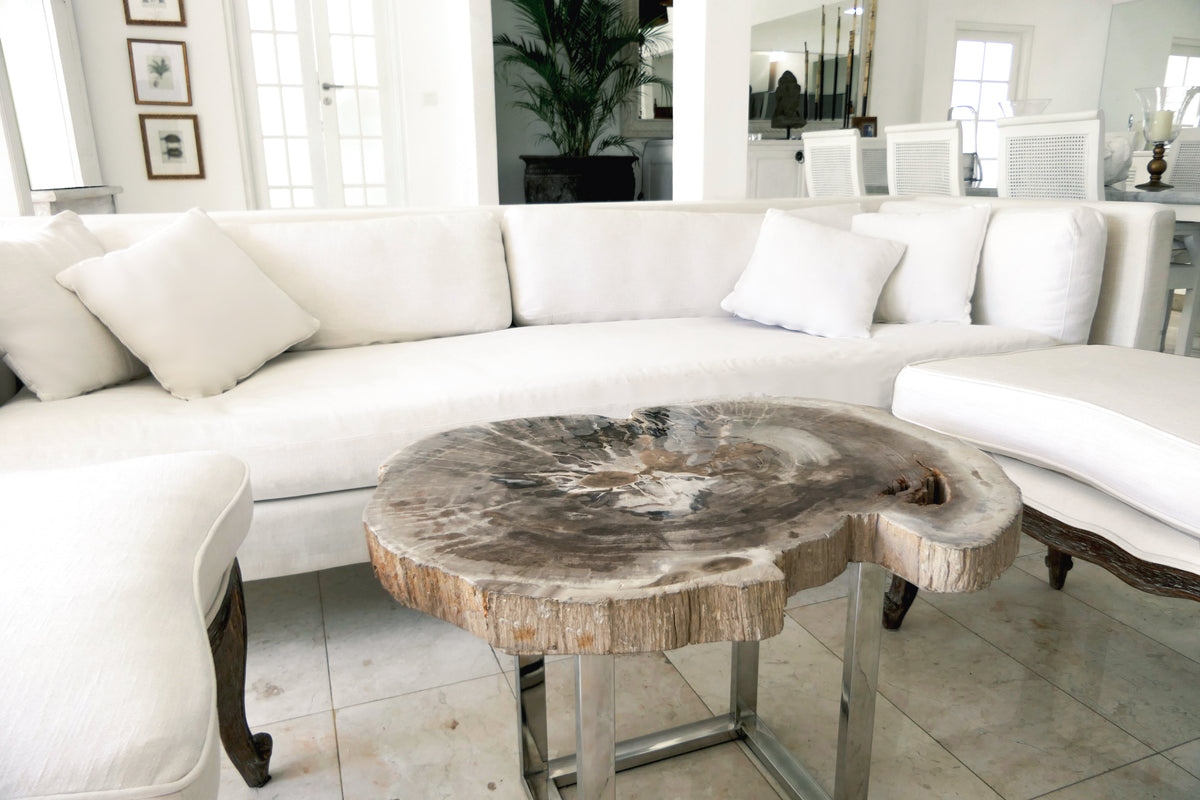
PETRIFIED WOOD: ORIGINS AND COLOURS
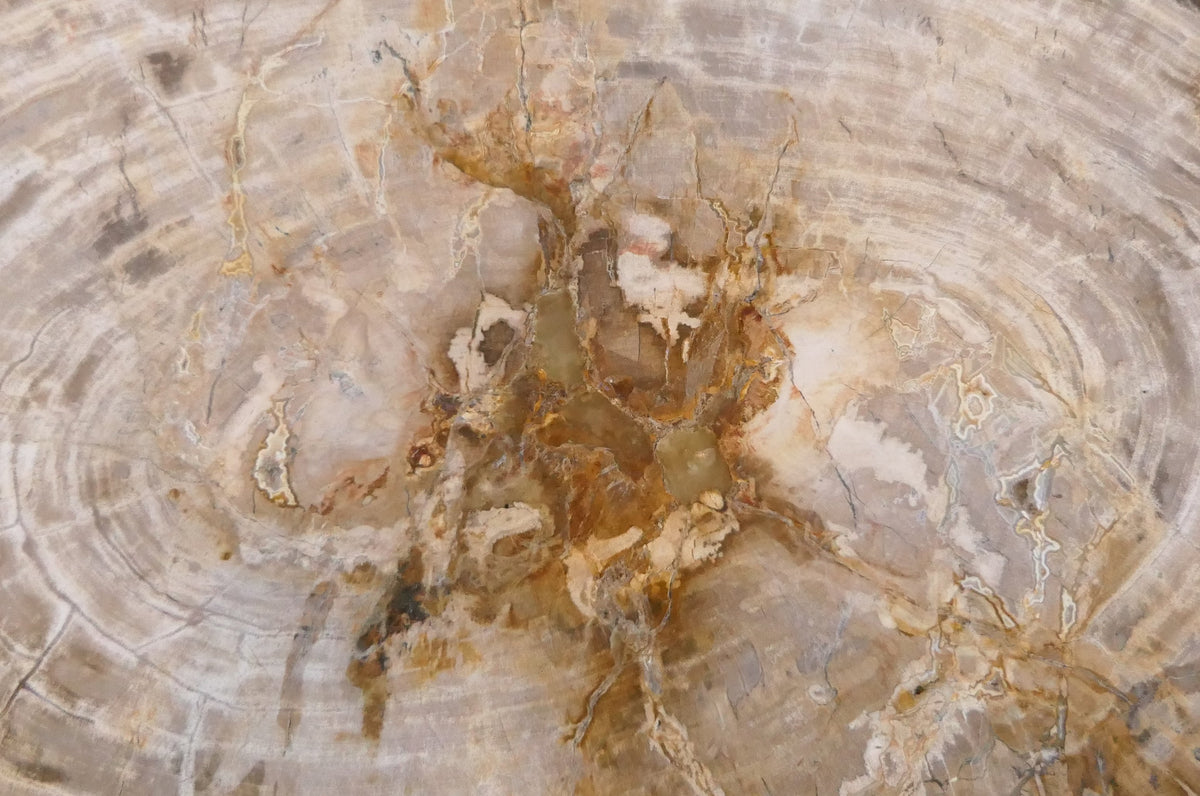
Petrified wood is among the most striking forms of fossilized plant material. It forms when buried wood is gradually mineralized over millions of years. Mineral-rich water moves through the cellular structure, replacing the original organic matter while preserving the grain, growth rings and natural outline of the tree.
Only a portion of the material can be cut and polished successfully. The finest pieces reveal layers of colour and pattern that make each specimen naturally unique.
HOW MINERALS CREATE COLOUR
The colour of petrified wood depends on the minerals and trace elements present during fossilization. Their concentration and combination can produce subtle neutral tones or more vivid shades.
BLACK PETRIFIED WOOD

Black and charcoal tones are commonly associated with carbon and manganese oxides. Pyrite may also appear as small metallic or sparkling inclusions. Completely dark pieces are comparatively rare, and close inspection often reveals delicate variations within the black surface.
WHITE PETRIFIED WOOD

White, ivory and pale grey tones are generally associated with silica, often present in quartz or chalcedony form. These lighter pieces have a quiet, sculptural appearance that works beautifully in refined interiors.
GREEN PETRIFIED WOOD

Green shades can result from trace minerals and elements such as copper or chromium. Their distribution through the original cellular structure creates distinctive natural markings.
RED PETRIFIED WOOD

Red tones are usually produced by iron oxides, particularly hematite. The intensity can range from soft rust to vivid red according to the amount and distribution of iron present.
ORANGE, BROWN AND YELLOW PETRIFIED WOOD

Yellow, ochre, orange and brown tones are commonly linked to iron oxides and minerals such as goethite. Together they create the warm, earthy palette often seen in petrified wood.
Explore our hand-selected petrified wood collection online, or visit the Kirschon showroom and gallery by appointment at Via Roma 38, 22020 Dizzasco (CO), near Lake Como.


Written by Sandra Kirschon


Leave a comment
This site is protected by hCaptcha and the hCaptcha Privacy Policy and Terms of Service apply.