
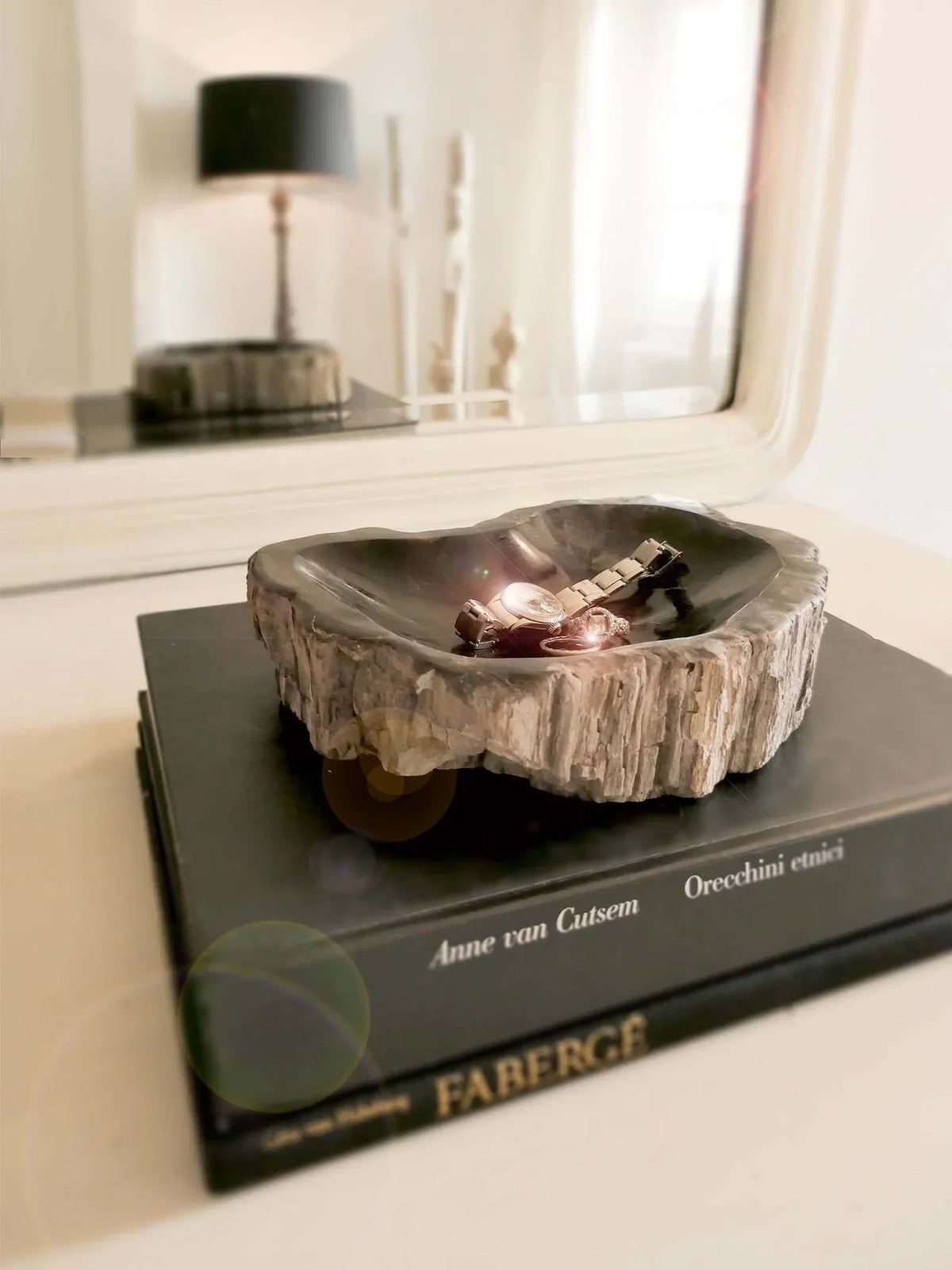
ALL ABOUT PETRIFIED WOOD

Petrified wood is the fossilized remains of ancient trees and plants. Over millions of years, minerals gradually replaced the original organic material while preserving details such as bark texture, growth rings and cellular structure. Many Indonesian specimens date from the Miocene epoch and are approximately 20 million years old, while petrified wood from places such as Arizona can be more than 200 million years old. Petrified wood is considered a gemstone and is the official state gem of Washington in the United States.
HOW PETRIFIED WOOD WAS CREATED
Petrified wood formed when prehistoric trees were buried by sediment in an oxygen-poor environment, which slowed normal decay. Mineral-rich water then moved through the buried wood. During an extremely gradual process known as permineralization, minerals such as silica, calcite and pyrite filled the pores and replaced the organic material while retaining the tree’s original structure.
WHERE IT COMES FROM
Petrified forests and deposits occur in many parts of the world, including Greece, the United States, Madagascar, Egypt, Bolivia, Canada, Brazil and Indonesia. Indonesian petrified wood often comes from trees belonging to the Dipterocarpaceae family, which remains widespread in the tropical forests of Southeast Asia. Fossilized palm wood is also found. Specimens from Arizona and Madagascar may include ancient Araucaria-related trees, although many other tree families are represented around the world.
THE COLOUR RANGE

The appearance of petrified wood varies according to the original tree, its age and the minerals present during fossilization. Indonesian pieces are often found in neutral shades of ivory, grey, brown and black, while some American specimens display red, blue or green tones. Copper, cobalt and chromium can contribute green and blue hues; manganese can create pink tones; iron oxides produce reds, browns and yellows; carbon and manganese oxides create darker areas; and silica is associated with white and grey tones.
HOW IT IS USED

Petrified wood is often shaped while preserving the organic outline of trunks, branches and roots. Large saws and grinders are used to cut the stone-like material before it is carefully shaped and polished, a demanding and time-consuming process. Polishing reveals the colours, grain and mineral patterns within each piece. Popular objects include side tables, stools, bookends, bowls, trays, trivets, decorative spheres and small sculptures. Because the material can be brittle, it is not suited to highly intricate carving.
WHY CHOOSE PETRIFIED WOOD ACCESSORIES
Petrified wood combines geological age, durability and natural beauty. No two pieces share exactly the same colour, pattern or silhouette, making every object genuinely individual. Its sculptural presence works equally well in contemporary, minimalist and richly layered interiors, where it introduces texture and a tangible connection to deep natural history.
TRADITIONAL BELIEFS ASSOCIATED WITH PETRIFIED WOOD
In crystal and spiritual traditions, petrified wood is associated with grounding, stability, patience and resilience. It is sometimes believed to encourage personal growth, confidence during periods of change, prosperity and harmony in relationships. These associations belong to cultural and spiritual belief systems rather than scientifically established effects.
HOW TO CLEAN AND CARE FOR PETRIFIED WOOD

With simple care, petrified wood can retain its beauty for many years:
- Avoid harsh chemicals, abrasive products, stiff brushes and rough cleaning materials.
- For regular cleaning, use lukewarm water and gently wipe the surface with a soft microfibre cloth or smooth cotton cloth.
- Use as few cleaning products as possible.
- If water is not sufficient, use a small amount of gentle, pH-neutral cleaner and test it first on an inconspicuous area.
- Wipe away oil, wine and coffee immediately because liquids can penetrate small pores and leave stains.
- Prolonged, intense sunlight may gradually fade darker tones, so very dark pieces are generally better suited to interiors.

Written by Sandra Kirschon


2 comments
Guten Morgen,
vielen Dank für Ihre Nachricht. Die Sorge um Umwelt und Ökosysteme ist absolut verständlich. Genau deshalb ist es wichtig zu präzisieren, dass versteinertes Holz (petrified wood) nicht aus aktuellen Rodungen oder lebenden Wäldern stammt.
Es handelt sich um sehr alte Baumstämme, die vor Tausenden oder sogar Millionen von Jahren auf natürliche Weise umgestürzt sind und vollständig mineralisiert wurden. In den Regionen, in denen versteinertes Holz gesammelt wird, tritt das Material häufig bereits an der Oberfläche oder in Flussbetten zutage, etwa nach Regenfällen oder natürlichen Bodenbewegungen. Es werden keine Bäume gefällt und keine Wälder zerstört.
Die Sammlung erfolgt selektiv und von Hand, ohne industrielle Grabungen, ohne chemische Verfahren und ohne Eingriffe in bestehende Ökosysteme. In vielen Gebieten ist diese Tätigkeit lokal geregelt und bietet den dortigen Gemeinschaften eine nachhaltige Einkommensquelle, die deutlich schonender ist als andere Formen der Rohstoffgewinnung.
Aus ökologischer Sicht gilt versteinertes Holz als nachhaltiges Material, da es keine heutigen natürlichen Ressourcen verbraucht, keine energieintensiven Industrieprozesse erfordert und vorhandene Materialien aus geologischen Zeiträumen sinnvoll nutzt.
Vielen Dank für Ihre Aufmerksamkeit und freundliche Grüße.
Kirschon
Guten Morgen, ich finde es mehr als bedenklich, wenn die Menschen jetzt auch noch anfangen, die Erde für fossiles Holz aufzureißen und auszurauben, nur um sich davon etwas als Dekoration hinzustellen. Ich würde gerne wissen, wie dieses Material in den tropischen Regionen zugänglich gemacht wird. Sicher nicht, ohne die Ökosysteme dort zu zerstören. Oder haben Sie andere Informationen dazu? Danke und freundliche Grüße
Anna Winters
Leave a comment
This site is protected by hCaptcha and the hCaptcha Privacy Policy and Terms of Service apply.