
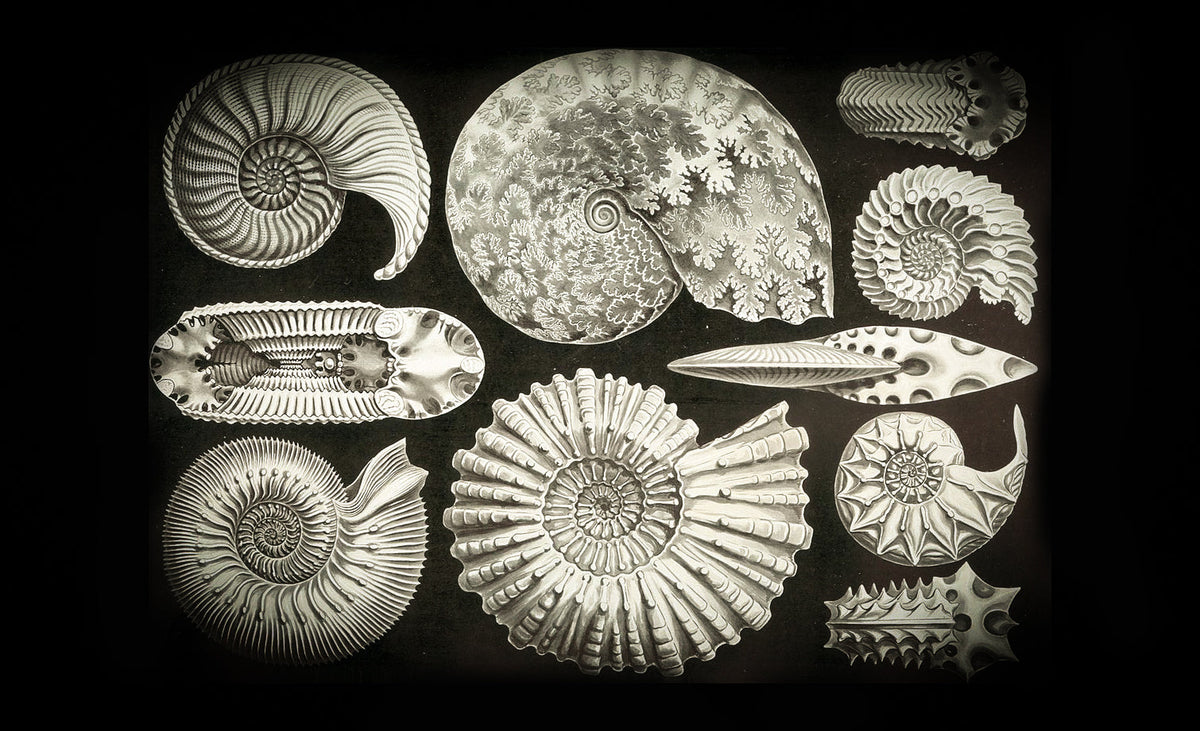
Ammonites: Ancient Sea Creatures and Sculptural Forms

Ammonites were marine molluscs related to modern cephalopods such as squid, octopus and nautilus. They appeared more than 400 million years ago and became especially abundant and diverse during the Mesozoic era before disappearing in the mass extinction approximately 66 million years ago.
THE STRUCTURE OF THE SHELL
Their most recognizable feature is a coiled shell divided internally into chambers. As the animal grew, it created larger chambers and lived in the outermost one. The earlier chambers formed a buoyancy system that helped regulate movement through the water.
LIFE IN ANCIENT OCEANS
Ammonites lived in seas around the world and evolved into an extraordinary range of sizes, shell shapes and surface patterns. Many were active predators or scavengers, probably feeding on small marine animals. Their abundance and rapid evolution make ammonite fossils valuable to scientists when dating marine rock layers.
FROM FOSSIL FORM TO DECORATIVE SCULPTURE
The perfect geometry of the spiral has made ammonites enduring symbols of time, evolution and the natural world. Fossils are collected for their scientific and aesthetic value, while ammonite-inspired sculptures translate the same form into a strong decorative object.

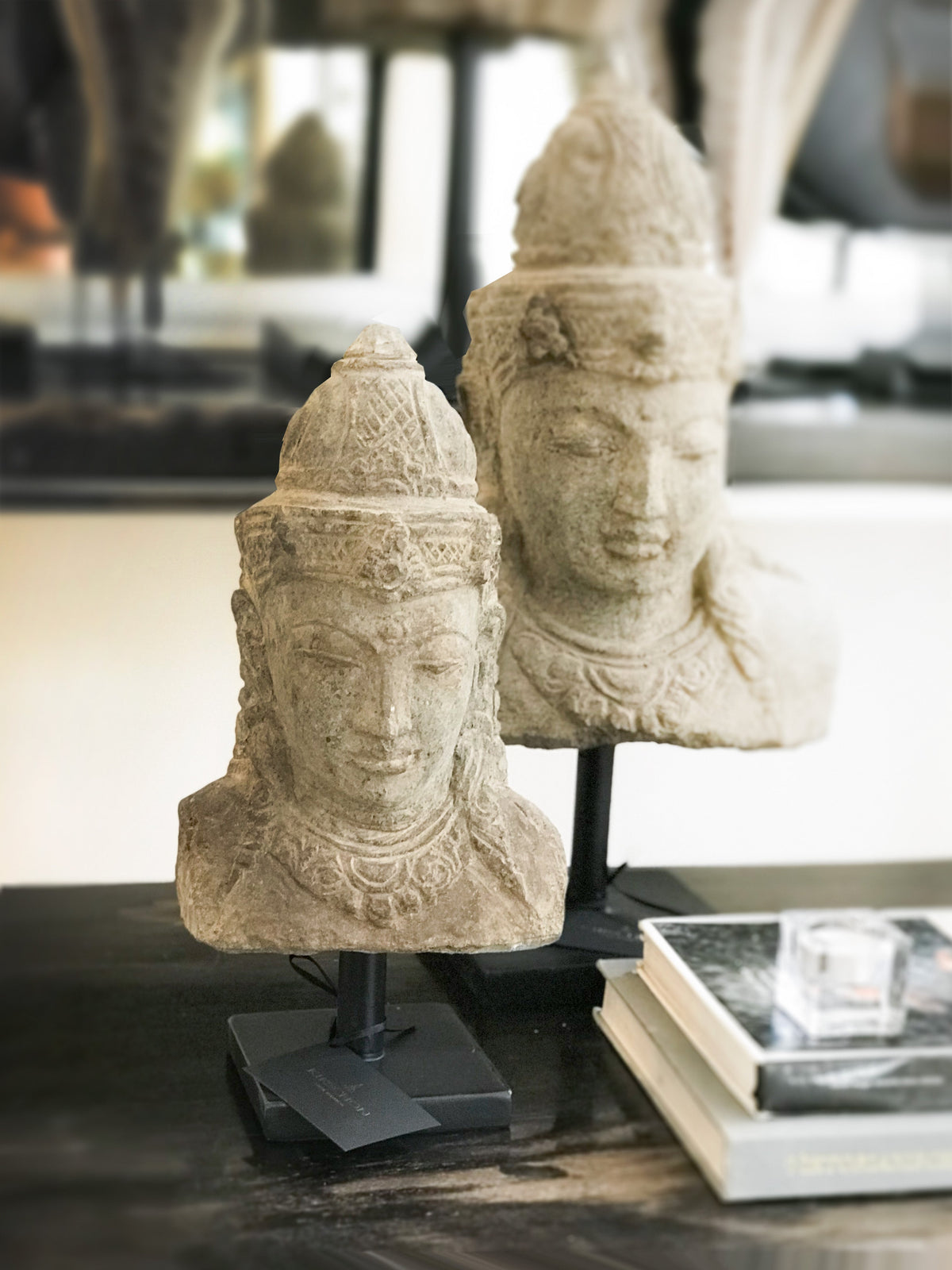
Kirschon’s ammonite stone sculptures are handcrafted in Java by skilled artisans. Each form is shaped and refined to emphasize the rhythm of the spiral and is displayed on a blackened metal stand.
They are available as a single sculpture or as a set of two online and in our Dizzasco showroom near Lake Como, open by appointment. Free shipping is available to most European countries, and prices for destinations outside the EU are shown without EU VAT where applicable.
For enquiries, contact info@kirschon.com or WhatsApp +39 331 9632422.

Written by Sandra Kirschon


Leave a comment
This site is protected by hCaptcha and the hCaptcha Privacy Policy and Terms of Service apply.